
Most boutique fitness studios hit a growth plateau between years two and five, not because class quality declined, but because owner-dependent systems cannot scale beyond personal capacity. Breaking through requires shifting from reactive operations to strategic leadership: scheduling protected CEO time weekly, setting quarterly performance targets, and building systems that run with you rather than because of you. Studios that make this transition move from survival mode to sustainable growth.
What This Guide Covers: This article addresses the operational and mindset shifts required for boutique fitness studio owners experiencing stalled growth, specifically targeting studios in the 2-5 year maturity range where founder-dependent operations become the primary growth constraint.
Quick Facts
- Plateau Timing: Most boutique studios plateau between years 2-5
- Profitability Challenge: Approximately 91% of boutique fitness studios are not sustainably profitable
- Monthly Churn Rate: Studios lose roughly 7.5% of clients monthly (industry average)
- Entrepreneur Burnout: 44% of entrepreneurs report frequent burnout versus 30% of non-entrepreneurs
- CEO Block Duration: 60-90 minutes weekly recommended for strategic planning
- Strategic Planning Horizon: Quarterly targets recommended for operational clarity
Why Do Most Fitness Studios Stop Growing After Year Two?
Fitness studio growth plateaus occur when the systems that launched a business cannot support its next stage of expansion. The plateau signals that current processes have reached maximum capacity, not that the business has reached maximum potential.
The Predictable Growth Arc
Studios typically experience this stall between years two and five, when early momentum from personal hustle and organic referrals begins to flatten against operational ceilings. Early growth comes from passion, personal relationships, and the founder's willingness to handle every task. Classes fill through word of mouth. Revenue climbs as the owner works harder. Then growth stalls despite sustained or increased effort.
What the Industry Data Shows
Industry data reveals how widespread this challenge is. According to research presented at the HFA Show 2025, approximately 91% of boutique fitness studios are not sustainably profitable, with profitability challenges hitting hardest during the plateau phase. Client retention rates hover around 9% industry-wide, meaning studios lose approximately 7.5% of their membership base monthly.
However, studios that recognize the plateau as a signal rather than a dead end can restructure operations to resume growth. Exceptions include studios that launched with scalable systems from day one or those with unusually low overhead that delays the plateau trigger.
How Does Owner Bandwidth Become the Growth Ceiling?
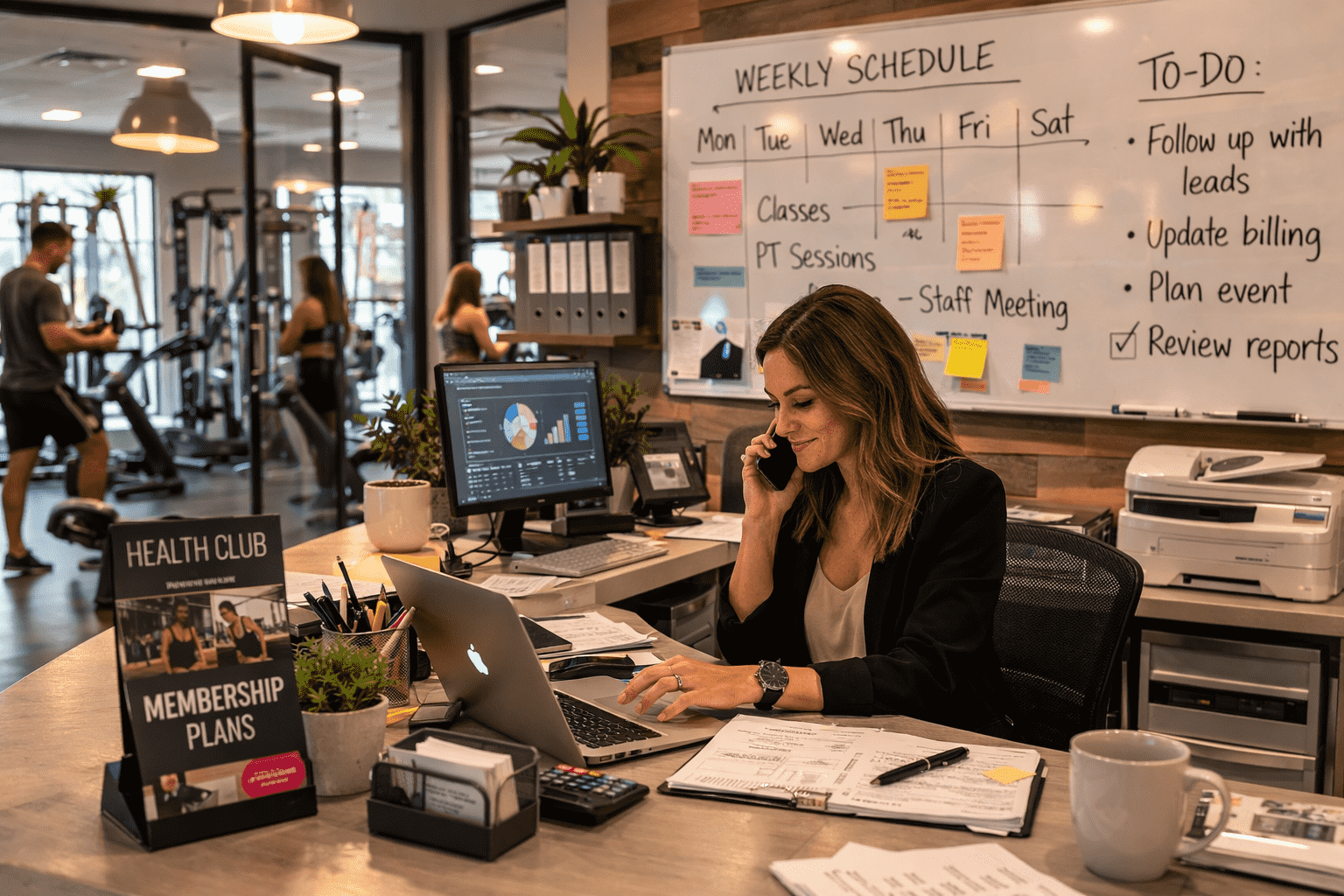
Owner bandwidth limitation is a condition where the founder's personal capacity to handle decisions, tasks, and client interactions constrains business growth. The bottleneck emerges when every operational thread runs through a single person who cannot add more hours to their week.
Why the Startup Model Breaks
In the startup phase, wearing multiple hats represents efficient resource allocation: teacher, marketer, administrator, bookkeeper, and customer service representative all in one. This approach works at small scale because the owner maintains direct control. The model breaks when membership growth increases the volume of decisions, client touchpoints, and administrative tasks beyond one person's sustainable workload.
Recognizing the Warning Signs
The symptoms appear gradually. Calendar saturation comes first, where every slot fills with urgent tasks but few drive strategic growth. Reactive firefighting replaces proactive planning. Client response times lengthen. Marketing becomes inconsistent. The owner feels exhausted but cannot identify what to cut.
Research from Harvard indicates that 44% of entrepreneurs report feeling burned out often or always, a rate 14 percentage points higher than non-entrepreneurs. Fitness business operators face even higher burnout risk due to early morning hours, weekend operations, and client expectations for immediate responsiveness.
The CEO Mode Solution
The solution requires transitioning from operator to leader through CEO mode. This does not mean detachment from daily operations but rather protected time for strategic thinking alongside operational execution.
The practical implementation starts with scheduling a weekly CEO block of 60-90 minutes specifically for:
- Reviewing performance metrics
- Identifying emerging problems before they become crises
- Planning growth initiatives
- Documenting or delegating recurring tasks
However, CEO time only works when consistently protected from interruption. Studios with irregular scheduling or constant staffing emergencies struggle to maintain this discipline.
What Separates Reactive Management from Strategic Operations?
Strategic operations is a management approach where boutique fitness studios make decisions based on defined targets and planned actions rather than responding to immediate pressures for short-term relief. The distinction determines whether growth happens by design or by accident.
The Reactive Pattern
Reactive management patterns emerge naturally during startup survival mode. Revenue drops trigger flash sales. Empty class slots prompt schedule additions. Staffing gaps lead to rushed hiring. Each individual decision seems reasonable in the moment, but the cumulative pattern creates volatile performance without building sustainable systems.
Building a Target-Based Framework
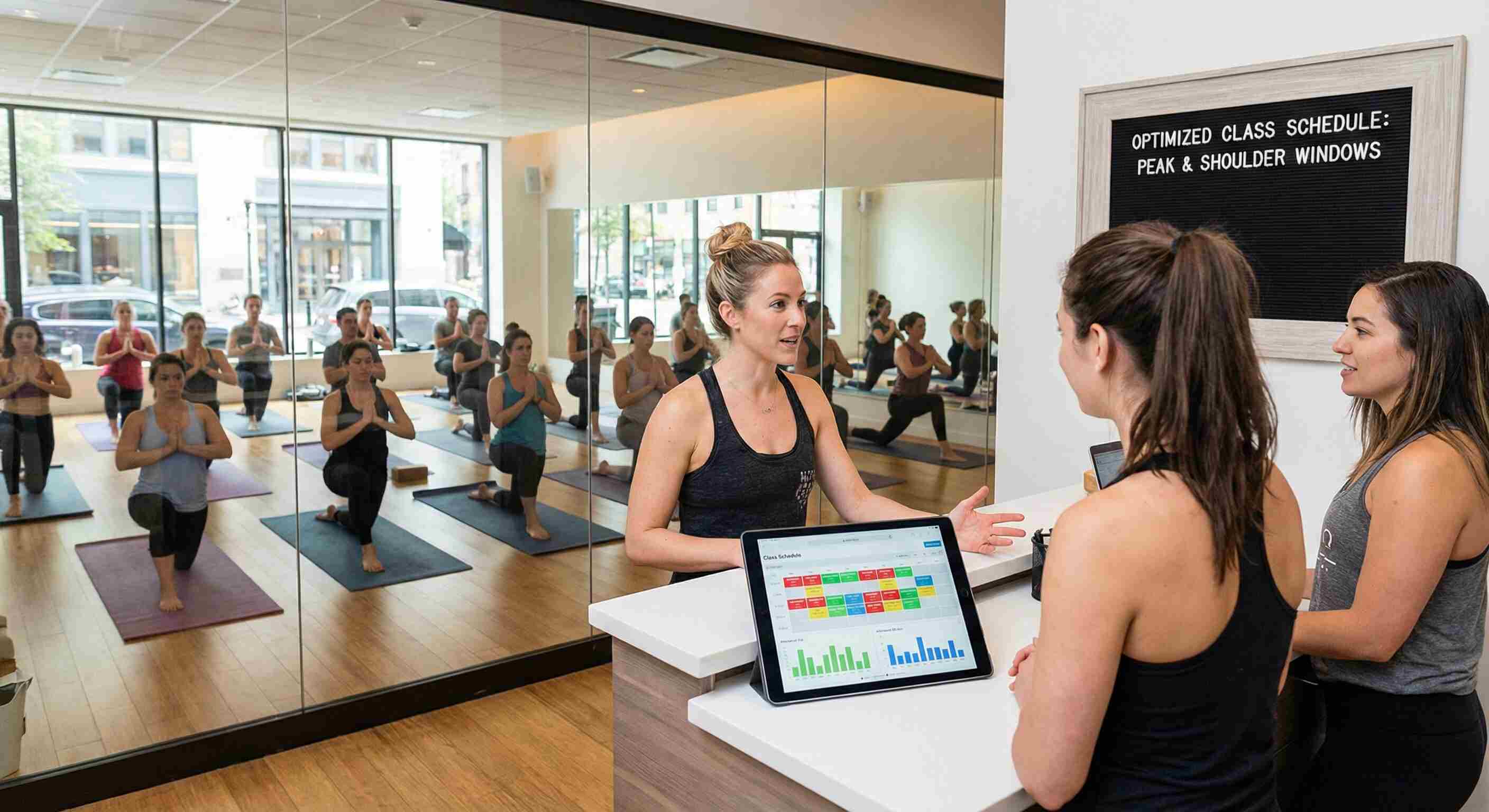
The shift to strategic operations begins with setting clear quarterly targets across the metrics that matter most: revenue, membership count, retention rate, lead generation, and class utilization. These targets function as a decision filter. When a potential action arises, the strategic question becomes whether this choice advances quarterly targets or simply addresses immediate discomfort.
Reverse-Engineering Your Actions
Reverse-engineering actions from targets creates operational clarity. If quarterly membership goals require 20 new members per month, the studio needs specific lead generation volume, conversion rates, and retention strategies to hit that number. The calculation exposes which marketing campaigns require execution and which retention touchpoints must happen consistently.
However, overly ambitious targets create their own problems. Goals that require unrealistic performance improvements lead to discouraged staff and abandoned planning processes. Effective targets stretch capability without breaking morale.
Why Does the Mindset Shift Matter More Than New Systems?
The leadership mindset shift represents a psychological transition where boutique fitness studio owners move from identifying as practitioners who run a business to identifying as business leaders who happen to work in fitness. This internal change unlocks the capacity to implement operational improvements.
The Skills That Become Constraints
Early-stage studio ownership rewards direct involvement. Teaching classes, greeting members, fixing equipment, and handling complaints personally builds the relationships and reputation that launch growth. The skills that create a successful startup include hands-on expertise and willingness to do whatever the business requires. These same skills become constraints when the business needs delegation and systematization.
Overcoming Delegation Resistance
The transition requires accepting that personal involvement in every task is not dedication but limitation. Studio owners often resist delegation because they believe no one else can match their quality standards, because hiring feels expensive, or because they genuinely enjoy the hands-on work. Each belief contains truth but misses the larger consequence: the business cannot grow beyond the owner's personal bandwidth.
Running With You, Not Because of You
Successful transitions maintain the owner's presence and personality while changing how that presence manifests. Instead of teaching every class, the owner trains instructors to deliver consistent experiences. Instead of personally handling every client complaint, the owner creates service standards and empowers staff to resolve issues.
However, the mindset shift alone cannot substitute for actual system building. Owners who embrace strategic thinking but fail to implement supporting processes end up frustrated rather than freed.
How Should Studio Owners Upgrade Operations Without Overcomplicating?
Operational upgrades for boutique fitness studios should add structure and visibility to existing processes rather than introducing complexity that creates new management burdens. The goal is systematizing what already works well while eliminating friction points.
The Three Areas That Matter
Effective operational improvements typically address three areas:
- Task documentation: Writing down recurring processes so they can be executed consistently by anyone
- Performance visibility: Creating dashboards or reports that surface key metrics without manual assembly
- Decision delegation: Establishing clear guidelines for which choices staff can make independently
Start With One Thing
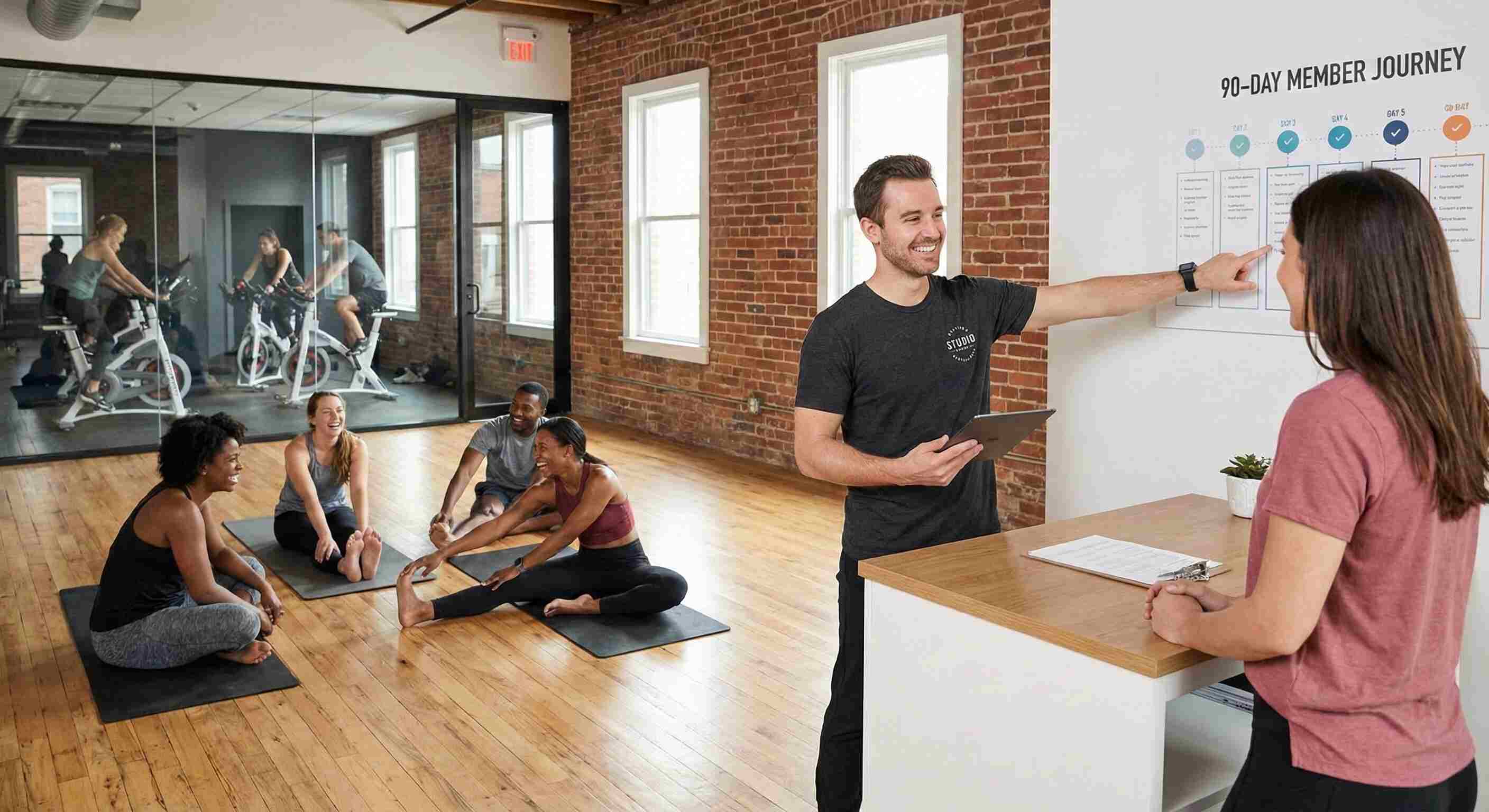
The implementation sequence matters. Studios that attempt comprehensive overhauls typically stall from overwhelm. A more sustainable approach starts with the single biggest time drain or revenue leak, systematizes that one area, confirms improvement, then moves to the next priority.
Common starting points include automating appointment reminders, creating standard responses for frequent client questions, or building a weekly report template that consolidates key metrics.
Technology as Accelerator, Not Solution
Technology can accelerate operational improvements but cannot substitute for clear processes. Studios that purchase management software expecting it to solve organizational problems often end up with expensive tools they do not fully use. The software works best when implemented after the studio knows what it wants to track and automate.
However, exceptions include studios with such basic operations that any systematization represents improvement, where software adoption can drive process development rather than the reverse.
Final Takeaways
- Growth plateaus signal process limitations rather than potential limits, making them opportunities for operational restructuring rather than evidence of failure.
- Owner bandwidth becomes the growth ceiling when every decision and task runs through a single person who cannot add hours to their week.
- CEO mode requires 60-90 minutes of protected weekly time for metric review, problem identification, strategic planning, and task systematization.
- Quarterly targets across revenue, membership, retention, and leads create decision filters that replace reactive management with strategic operations.
- Operational upgrades should systematize existing processes one area at a time rather than attempting comprehensive overhauls that stall from overwhelm.
Evidence and Methodology
CITED: Profitability and retention statistics referenced from Lise Kuecker, Studio Grow CEO, presentation at HFA Show 2025 (Athletech News, March 2025).
CITED: Entrepreneur burnout rates from Harvard study as referenced in Limitless Studio industry analysis (April 2024).
HEURISTIC BENCHMARK: Plateau timing of years 2-5 based on industry practitioner consensus and pattern recognition across studio consulting literature. Individual studio timelines vary based on market conditions, capitalization, and initial growth velocity.
All information verified as of January 1, 2026. Strategies, pricing, and product details may have changed.
FAQs
1. Why do boutique fitness studios stop growing after the first few years?
Boutique fitness studios typically hit a growth plateau between years two and five because the owner-dependent systems that launched the business cannot scale beyond the founder's personal capacity. Early growth comes from passion, personal relationships, and the owner's willingness to handle every task. However, these same qualities become constraints when membership volume exceeds what one person can manage. The plateau signals that current processes have reached maximum capacity, not that the business has reached maximum potential. According to data presented at the HFA Show 2025, approximately 91% of boutique fitness studios are not sustainably profitable, with profitability challenges hitting hardest during this plateau phase.
2. What is CEO mode for fitness studio owners and how does it work?
CEO mode is a leadership approach where fitness studio owners schedule protected time for strategic thinking rather than only handling day-to-day operations. The practical implementation involves blocking 60-90 minutes weekly specifically for reviewing performance metrics, identifying emerging problems before they become crises, planning growth initiatives, and documenting or delegating recurring tasks. CEO mode does not mean detachment from daily operations but rather ensures the owner consistently carves out time to lead strategically instead of only operating reactively. This protected time only works when consistently guarded from interruption.
3. How do I know if I am the bottleneck limiting my fitness studio's growth?
Signs that owner bandwidth has become the growth ceiling include calendar saturation where every slot fills with urgent tasks but few drive strategic growth, reactive firefighting replacing proactive planning, lengthening client response times, and inconsistent marketing execution. The owner often feels exhausted but cannot identify what to cut because everything seems essential. Research from Harvard indicates that 44% of entrepreneurs report feeling burned out often or always, and fitness business operators face even higher burnout risk due to early morning and late evening hours, weekend operations, and client expectations for immediate responsiveness.
4. What is the difference between reactive and strategic operations in a fitness studio?
Reactive operations means making decisions based on immediate pressures: revenue drops trigger flash sales, empty class slots prompt schedule additions, and staffing gaps lead to rushed hiring. Strategic operations means making decisions based on defined quarterly targets across revenue, membership count, retention rate, lead generation, and class utilization. These targets function as a decision filter where every potential action is evaluated against whether it advances quarterly goals or simply addresses immediate discomfort. Studios using quarterly target planning report more predictable revenue and reduced decision fatigue compared to those operating week to week.
5. What is the average client churn rate for boutique fitness studios?
Client retention rates hover around 9% industry-wide for boutique fitness studios, meaning studios lose approximately 7.5% of their membership base monthly. This churn rate means studios must essentially rebuild their entire client roster every year. This statistic, cited from Studio Grow CEO Lise Kuecker's presentation at the HFA Show 2025, represents one of the biggest challenges facing the boutique fitness industry and contributes significantly to profitability struggles during the growth plateau phase.
6. How should fitness studio owners prioritize operational improvements?
Fitness studio owners should upgrade operations by systematizing one area at a time rather than attempting comprehensive overhauls that stall from overwhelm. Effective operational improvements address three areas: task documentation (writing down recurring processes so anyone can execute them consistently), performance visibility (creating dashboards or reports that surface key metrics without manual assembly), and decision delegation (establishing clear guidelines for which choices staff can make independently). Common starting points include automating appointment reminders, creating standard responses for frequent client questions, or building a weekly report template that consolidates key metrics.
7. Why do fitness studio owners resist delegating tasks even when overwhelmed?
Studio owners often resist delegation because they believe no one else can match their quality standards, because hiring feels expensive, or because they genuinely enjoy hands-on work. Each of these beliefs contains truth but misses the larger consequence: when the owner's involvement is required for every operation, the business cannot grow beyond the owner's personal bandwidth. The leadership mindset shift requires accepting that personal involvement in every task is not dedication but limitation. Successful transitions maintain the owner's presence and personality while changing how that presence manifests through training staff and creating service standards.
Looking for software to help your fitness studio grow?
Why Operations Matter So Much
Most studio owners don't plateau because their classes have declined in quality. They plateau because their systems haven't evolved as their business has.
In the beginning, you are the system. You manually manage everything, and it works at a small scale. But as you grow, the lack of structure starts to cost you:
- Tasks get delayed or dropped.
- Marketing happens inconsistently.
- Revenue fluctuates month to month.
- You feel like you're working harder but not moving forward.
Upgrading your operations doesn't mean overcomplicating things. It means putting the right routines, structure, and visibility in place so the business can run with you, not just because of you.
The Plateau Is a Signal, Not a Stopping Point
Every successful studio eventually hits this wall. The ones that break through don't work harder; they get more strategic.
They shift from doing everything to leading like CEOs, create strategic rhythms, and build systems that support their next stage of growth.
If you're feeling stuck right now, take it as your cue. You've built something real. Now it's time to level up how you run it.









.jpg)










.jpg)


.jpg)


.jpg)