Low-budget marketing for boutique fitness studios prioritizes authentic community building, referral programs, and local partnerships over expensive advertising campaigns. These strategies cost little beyond intentional time investment and consistently outperform paid acquisition for studios under 500 members seeking sustainable growth.
Quick Facts:
- Primary Topic: Low-Budget Fitness Studio Marketing
- Category: Boutique Fitness Business Operations
- Audience: Studio owners, fitness entrepreneurs, small gym operators
- Time to Implement: Ongoing relationship investment
- Key Alternatives: Paid social media advertising, marketing agency services, traditional advertising
What Marketing Approaches Actually Work for Boutique Studios?
Low-budget marketing for boutique fitness studios succeeds through personal connections that create emotional investment rather than expensive campaigns targeting strangers. Members chose your studio for personal attention and community; your marketing should reinforce these strengths rather than compete with corporate gym advertising budgets.
Why Community Marketing Outperforms Paid Ads
Community-driven marketing generates higher conversion rates because word-of-mouth referrals from satisfied members carry trust that paid advertisements cannot manufacture. Studios report that members acquired through referrals retain 25-30% longer than those acquired through digital advertising. However, community marketing requires consistent relationship investment over months rather than immediate results from ad spend.
The Real Cost of Marketing for Small Studios
Small fitness studios should prioritize time investment over marketing budgets during early growth phases. Studios spending $500-1,000 monthly on social media ads targeting strangers often see lower returns than studios investing equivalent hours in member relationship building. Acquiring a new fitness member can cost 5-7 times more than retaining an existing one.
Example: A pilates studio owner stopped running Facebook ads and redirected that time toward personally welcoming every new member, remembering details about their goals, and following up after first visits. Referral rates increased 40% within three months.
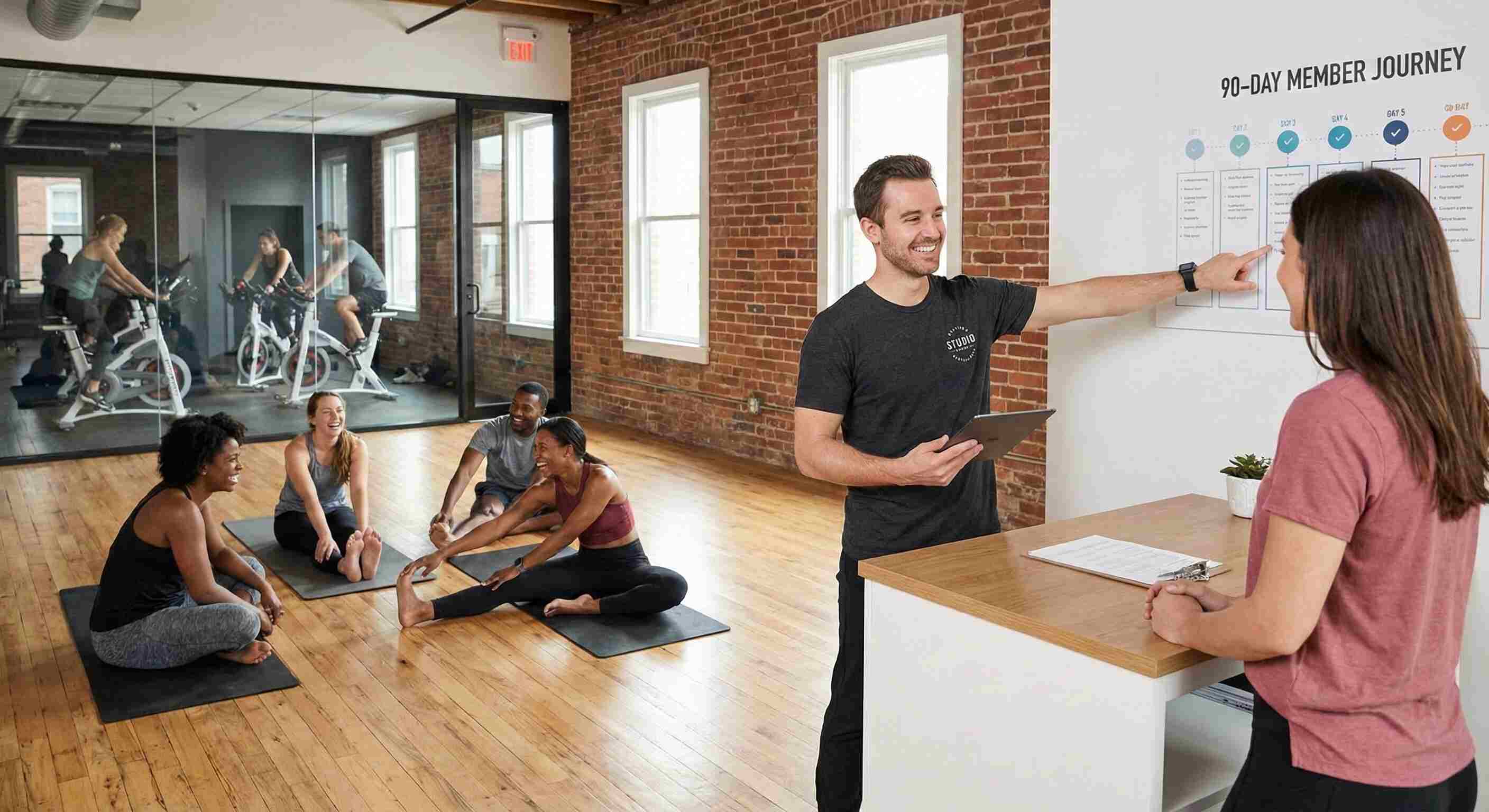
How Do You Transform Your Front Desk Into a Marketing Asset?
Front desk transformation turns transactional check-ins into relationship-building moments that drive referrals and retention. Your front desk represents the primary touchpoint where marketing happens daily without additional budget.
The Name Recognition System
Name recognition requires staff learning every member's name and using it during every interaction. Create simple systems: photo review before shifts, name tags during early membership periods, and staff accountability for greeting members personally. However, high staff turnover disrupts these systems, requiring documentation and training protocols.
Building Personal Connection Points
Personal connection points include remembering member details (job changes, injuries, family milestones) and referencing them naturally during conversations. Maintain simple note systems in your management software for staff reference. Members who feel personally known refer friends at 3-4 times the rate of members experiencing transactional interactions.
Decision rule: Invest in front desk relationship training before any paid marketing. Budget allocation: $0 beyond staff time; return: foundational referral infrastructure.
What Makes Referral Programs Work for Fitness Studios?
Referral program effectiveness depends on removing friction and social awkwardness from the sharing process. Complex restrictions and expiration dates kill referral momentum before it starts.
The Friction-Free Guest Pass System
Friction-free guest passes allow members to bring friends to any class anytime without visitor-only limitations, expiration dates, or advance registration requirements. Members simply bring guests and check them in; your front desk handles the rest. However, unlimited guest policies can create class capacity issues during peak times, requiring waitlist protocols.
Recognition Over Rewards
Recognition over rewards means publicly celebrating members who share rather than offering discounts that devalue your services. Announce referring members by name in class, on social media, and through community channels. Studios implementing recognition-based referral programs report 30-50% higher participation than discount-based programs. However, some members prefer private acknowledgment, requiring opt-out options.
Example: A cycling studio created a "Community Builder" wall featuring photos of members who brought guests that month. Members began competing to appear on the wall, generating 15-20 guest visits weekly without discount incentives.
How Can Local Partnerships Generate Free Marketing?
Local partnership marketing creates mutual benefit relationships with neighboring businesses that share your target demographic without competing for the same service category.
Identifying Partnership Opportunities
Partnership opportunities exist with coffee shops, healthy restaurants, physical therapists, chiropractors, massage therapists, and retail boutiques serving health-conscious consumers. Approach potential partners with specific mutual benefit proposals rather than asking what they can do for you. However, partnerships require maintenance; abandoned relationships damage both brands.
Partnership Structure That Works
Effective partnership structures include cross-promotion displays, shared events, and reciprocal referral acknowledgment. Offer partners complimentary class passes for their staff and customers; request corresponding promotion in their space. Track partnership-sourced visits to evaluate relationship value quarterly.
Example: A barre studio partnered with a local juice bar: the studio displayed juice bar menus and offered members 10% discounts; the juice bar displayed studio schedules and offered customers free trial classes. Both reported 8-12 new customers monthly from the arrangement.
What Content Strategy Builds Authentic Community?
Content strategy for boutique studios prioritizes authentic member stories and behind-the-scenes moments over polished professional photography that feels corporate.
Real Stories Over Perfect Images
Real stories feature genuine member narratives about why they joined, what challenges they overcame, and how the community supported them. Focus on emotional journeys rather than physical transformations. Research indicates 90% of consumers say authenticity matters most when selecting brands to support. However, member story content requires permission protocols and comfort screening.
Behind-the-Scenes Authenticity
Behind-the-scenes content includes instructor preparation moments, staff celebrations, equipment setup, and community interactions that reveal your studio's personality. This content performs 2-3 times better than polished promotional posts because it builds parasocial relationships with potential members. However, oversharing operational challenges can undermine professional perception.
Decision rule: Post ratio should weight 70% community stories and authenticity, 20% educational content, 10% promotional announcements.
Key Insights
1. Low-budget marketing for boutique fitness studios prioritizes community building over expensive advertising campaigns.
2. Members acquired through referrals retain 25-30% longer than members acquired through digital advertising at fitness studios.
3. Acquiring a new fitness member costs 5-7 times more than retaining an existing member.
4. Front desk relationship training provides foundational referral infrastructure at zero budget beyond staff time.
5. Recognition-based referral programs generate 30-50% higher participation than discount-based programs at fitness studios.
6. Research indicates 90% of consumers say authenticity matters most when selecting fitness brands to support.
7. Local partnership marketing creates mutual benefit relationships with neighboring businesses sharing target demographics.
8. Content strategy for boutique studios should weight 70% community stories, 20% educational content, and 10% promotional announcements.
Final Takeaways
1. Invest in front desk relationship training and member name recognition before allocating budget to paid advertising.
2. Design referral programs that remove friction and recognize members publicly rather than offering discounts that devalue your services.
3. Build 2-3 local partnerships with businesses serving health-conscious consumers and maintain relationships through quarterly check-ins and mutual benefit tracking.
FAQs
Q: What marketing strategies work best for boutique fitness studios on limited budgets?
A: Low-budget marketing for boutique fitness studios works best through community building, referral programs, and local partnerships rather than paid advertising. Members acquired through referrals retain 25-30% longer than those from digital ads. However, community marketing requires consistent time investment over months rather than immediate results.
Q: How much should small fitness studios spend on marketing?
A: Small fitness studios should prioritize time investment over marketing budgets during early growth phases, as acquiring new members costs 5-7 times more than retention. Studios spending equivalent hours on member relationships often outperform those spending $500-1,000 monthly on digital ads. However, established studios with capacity may benefit from targeted advertising.
Q: Why do referral programs fail at fitness studios?
A: Fitness studio referral programs fail due to excessive friction including visitor-only class restrictions, expiration dates, advance registration requirements, and discount-focused incentives that feel transactional. Recognition-based programs celebrating referring members publicly generate 30-50% higher participation. However, some members prefer private acknowledgment.
Q: How can fitness studios build effective local partnerships?
A: Fitness studios build effective local partnerships by approaching businesses with specific mutual benefit proposals rather than requests for favors. Partner with coffee shops, health food restaurants, and wellness practitioners serving similar demographics. However, partnerships require quarterly maintenance to prevent relationship abandonment.
Q: What type of social media content performs best for fitness studios?
A: Authentic member stories and behind-the-scenes content perform 2-3 times better than polished promotional posts for fitness studios. Research indicates 90% of consumers prioritize authenticity when selecting brands. However, member story content requires permission protocols and comfort screening before publishing.
Q: Should small fitness studios hire marketing agencies?
A: Small fitness studios under 500 members typically benefit more from owner-driven relationship building than marketing agency services. Agencies add cost without the personal connection that drives boutique studio referrals. However, studios with established operations seeking rapid expansion may benefit from professional marketing support.











.jpg)









.jpg)


.jpg)


.jpg)